
For Directors of Pharmacy
Demonstrate the value
of your pharmacy service.
Measure pharmacy activity and impact, prioritise patients for review, and manage formulary and transitions of care across every site.
Compare plans and pricing.
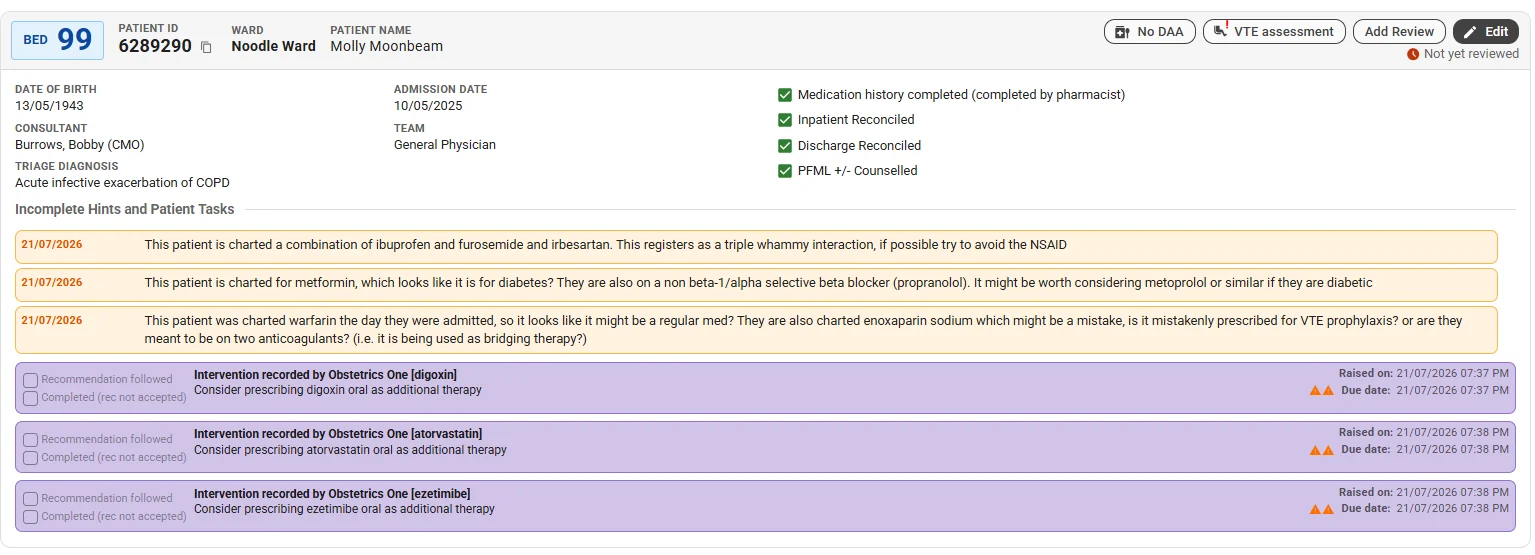
History captured, rules applied, interventions measured, and pharmacists directed to the patients who need them most.
The challenges
- Advanced Pharmacy Australia's 2025 workforce report found that three in four hospital sites reduced pharmacy services in the past year, and 64.5% carry pharmacist vacancies. Pharmacy leaders must prioritise clinical review with limited staff while demonstrating the value of the service.Vacancies, leave and a growing medication load require pharmacy leaders to prioritise clinical review with limited staff, while demonstrating the value of the service beyond activity counts.
- Pharmacy managers have no clear view of which wards or teams hold the highest-risk patients, to assign staff where they are needed most.
- Medication management plans completed at one site are lost when the patient transfers to another hospital.
- Senior pharmacists hold extensive knowledge of how to identify and manage patient issues, but cannot devote their time to training every new and locum pharmacist. They need a way to hand that knowledge down.
- Medication issues occur most often at transitions of care. There is no pharmacy-driven process for handing over part-finished histories, reconciliation and possible interventions as the patient moves through the hospital, nor a seamless way to produce a patient-friendly medication list during a busy discharge.
Source: Advanced Pharmacy Australia, State of Pharmacy: Workforce Insights 2025.
Coverage across multiple sites
A single prioritised list across every site, ranked by the hints your service enables, so pharmacists review the highest-risk patients first.
Vancomycin AUC dosing
A Bayesian calculator that projects AUC from a single level, validated against two patient cohort reference sets, synthetic data and clinical staff feedback, and undergoing TGA Class IIb conformity assessment. Included on every plan.
Offline access
Native iOS and Android apps with offline pathways, giving prescribers at smaller sites access to pharmacy guidance at any time.
Benchmarking across sites
Opt-in comparison with peer services, and variation across your own campuses, drawn from routine decisions rather than sampled audits.
Content governance at scale
Version history, peer review and approval, nightly checks of every pathway against its guideline, and a shared review panel with other services.
Integrates with your EMR
Operates alongside Epic, Cerner, MedChart or iCM, or independently. ISO 27001 and 27017 certified, with TGA Class IIb conformity assessment underway.
Capabilities for pharmacy leaders
01 · SERVICE REPORTING
Report pharmacy activity and impact
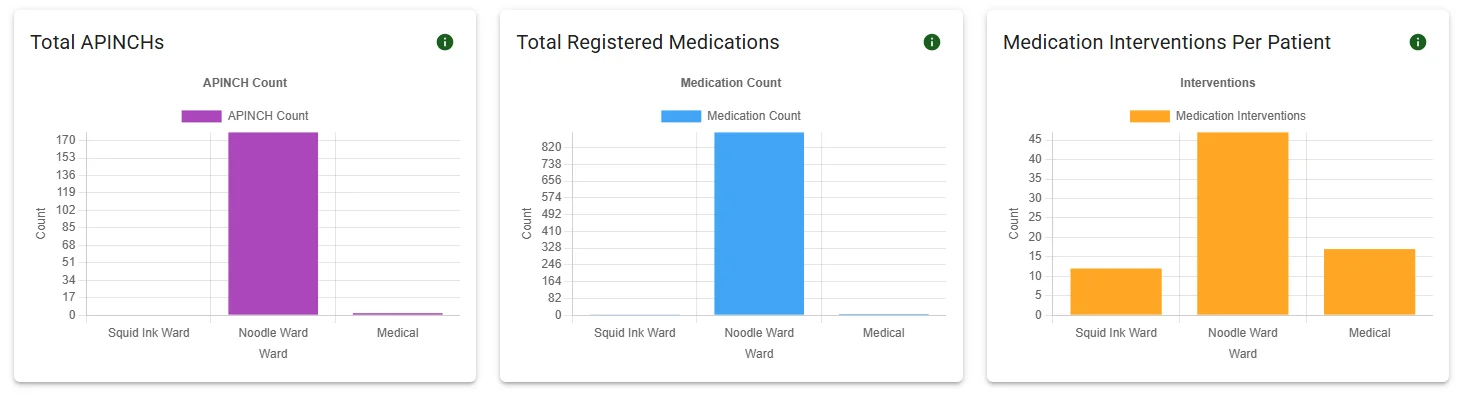
The pharmacy dashboard reports medication histories completed, medicines reconciled, patients without a recent pharmacy review, and interventions per patient and per ward. Custom reports can be built without a software release.
- Activity and impact by ward, team and pharmacist
- High-risk medicine load by ward, to support workforce planning
- Risk-banded interventions, recorded once and reported across the service
02 · LOCAL RULE GOVERNANCE
Decision support rules governed by your pharmacists
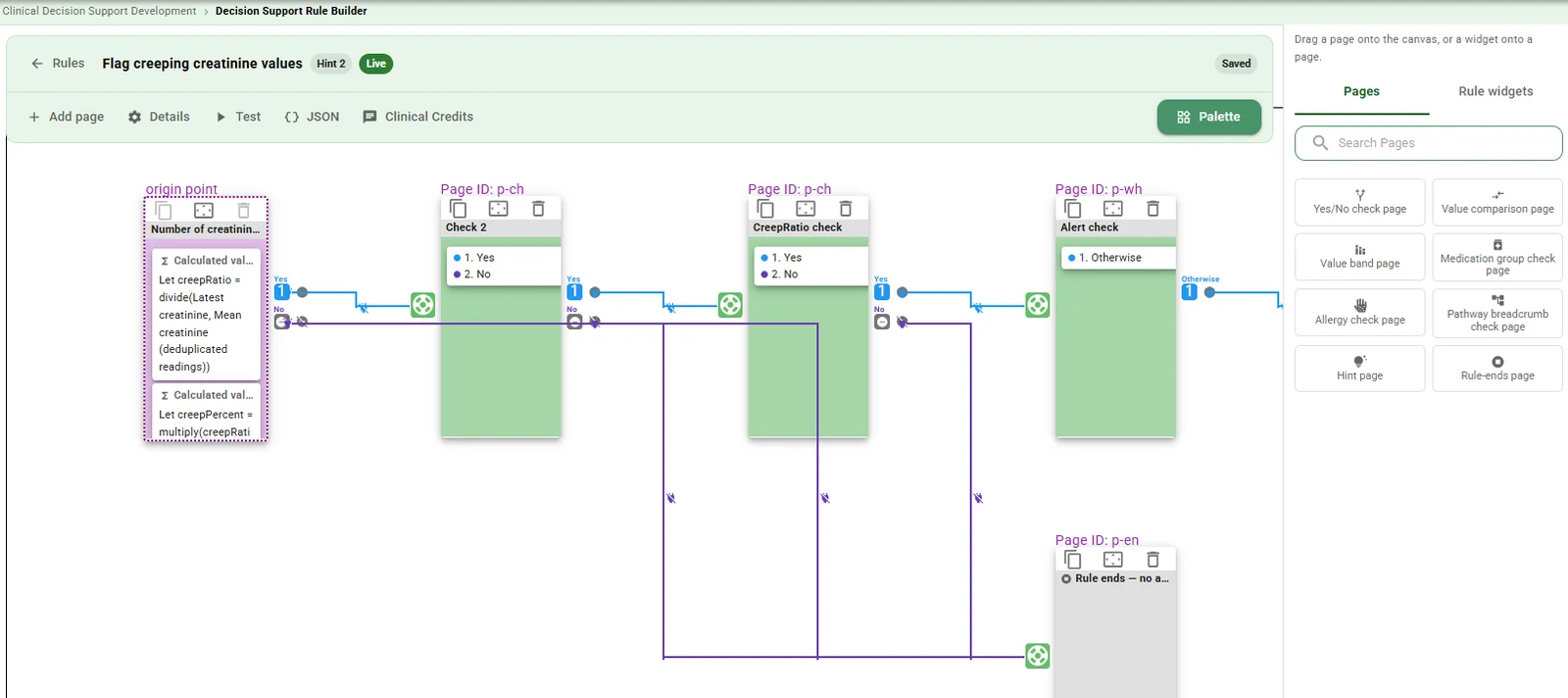
Your senior pharmacist group owns the pharmacy rule set. Rules are built and refined on the hint builder canvas, or adopted from rules developed by neighbouring pharmacy departments, and published without a software release.
Every useful or not useful rating at the bedside feeds back into rule refinement, so the hints your pharmacists see improve with use.
- Build, test and publish rules on a visual canvas
- Adopt and adapt rules shared by other pharmacy departments
- Usefulness reported for every hint, to guide refinement
03 · PRIORITISATION
Prioritise patients for pharmacist review
The pharmacy ward list ranks patients by the hints your service enables, shows the care already completed for each patient, and carries risk-banded interventions between shifts.
In development: a machine learning risk score that learns from similar past patients and recalculates at admission, transfer, ward review and discharge, with weightings set by your service.
- Select from a shared library of thousands of hints, and share hints your team develops
- Disable any hint for your site, with an audit note
- Filter to the current admission, with prior recommendations in view
04 · FORMULARY AND TRANSITIONS
Integrated formulary and transitions of care
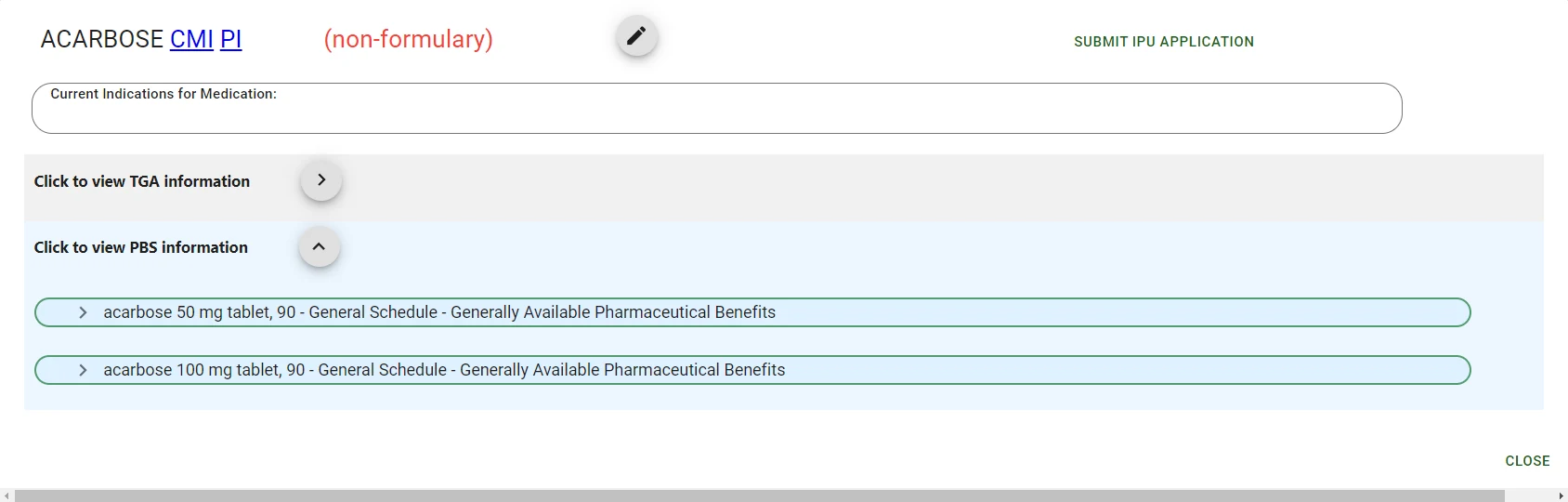
- Review every pathway that recommends a medicine before a formulary changeReview every pathway that recommends a medicine before changing its listing
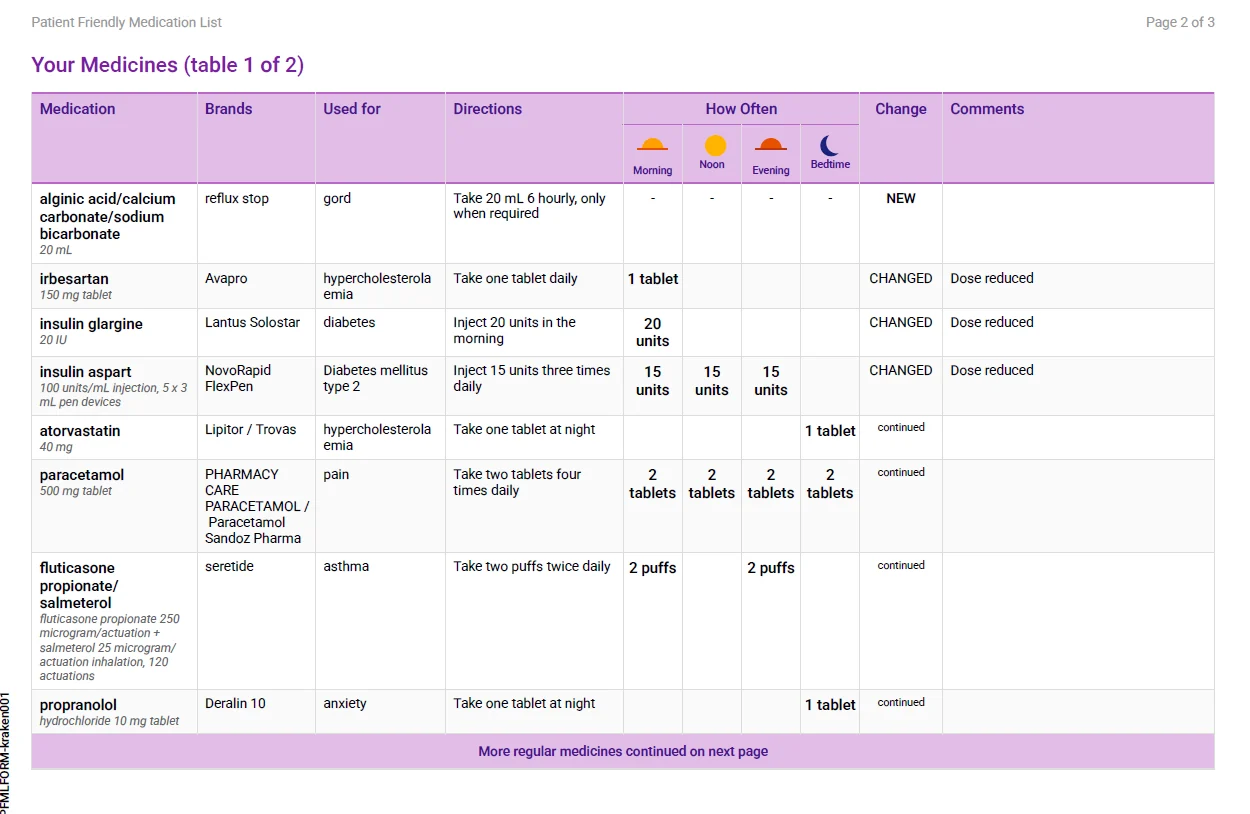
- Medication management plans shared between sites, and printable patient-friendly medication lists
- Developed with pharmacists across multiple health services
RAPID IMPLEMENTATION
Your guidelines, converted into decision support
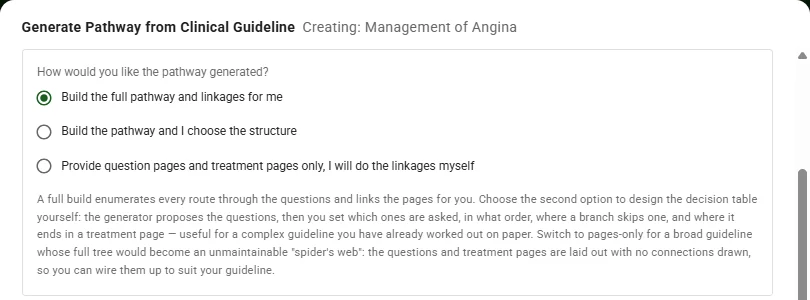
Provide your complete set of guidelines and procedures. Clinical Branches extracts the clinical logic from every document and returns draft pathways and decision support rules for your clinicians to review.
Your guidelines and procedures
Draft content for every document, ready for review
1. Share your guidelines
Provide your full set of guidelines and procedures, as they stand today.
2. Clinical logic extracted
Every document becomes a draft decision tree with its decision support rules, linked back to its source.
3. Clinician review, then publish
Your clinicians review the drafts through the shared review panel. Nothing generated reaches clinical use without review.
New or revised procedures can be converted at any time, individually or as a set, and services can also subscribe to pathways other services have already built and validated.
Additional capabilities
Mobile scribing and medication photos
Dictate the medication history or photograph the patient's medicines at the bedside on a mobile device, while the full medication management plan remains open at the workstation.
Shareable medication management plans
Completed medication management plans shared between services with a benchmarking agreement, across health service and state lines, so the plan follows the patient.
Printed hospital forms
Digital medication management plans convert to printed hospital forms, including an interim medication chart.
Shared hint library
Thousands of hints available. Each service selects its own, and can share the hints it develops.
Configurable rules
Edit and publish rules on the same day, without a software release.
Non-formulary reporting
Frequency of non-formulary medicines on admission, and the substitutions required, by medicine and site.
Vancomycin AUC calculator
Bayesian AUC dosing from a single level, included on every plan.
Pharmacist risk score
Dynamic risk scoring across the admission, weighted to your service priorities.
77
hospitals live across Australia and Canada
20.8 pts
improvement in prescribing appropriateness where adopted, in the WACHS and UTS evaluation
2
patient cohort reference sets used to validate vancomycin AUC dosing
ISO
27001 and 27017 certified for information security
Joint evaluation of the platform by the WA Country Health Service (WACHS) and the University of Technology Sydney (UTS), funded by the Digital Health Cooperative Research Centre (DHCRC-0248). Prescribing was compared before and after implementation in a balanced sample of three adopter and five non-adopter hospitals, and the estimates describe an effect observed where the platform was adopted. WACHS deploys the platform as AMPS. Read the evaluation snapshot (PDF). The evaluation measured antimicrobial stewardship. Vancomycin AUC validation was presented at Medicines Management 2025. Read the validation poster (PDF).
Implementation and support
A managed service with implementation, upgrades and support included.
Browser-based deployment
Runs in the browser on managed devices, with native iOS and Android apps. Single sign-on with Microsoft Entra ID is in production at multiple health services.
Live in two to six months
Environment, configuration and single sign-on in four to eight weeks, local content review alongside, then onboarding in two to four weeks per site group.
Upgrades and support included
Maintenance, security patching, releases and upgrades are included in the licence. Releases are zero-downtime with seven days notice, and support is delivered directly by the Clinical Branches team.
Predictable per-bed licensing
No per-user, per-transaction or per-query charges, so costs stay predictable as adoption grows.
Our team supports you through security review and ICT approval as part of implementation.
Security and shared responsibilities Device information Plans and pricing
Book a demonstration
See how Clinical Branches supports your pharmacy service, with a walkthrough tailored to your department.
Explore other roles